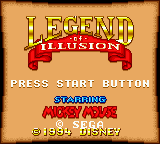













Legend of Illusion Starring Mickey Mouse – Game Gear Game Review
Legend of illusion Starring Mickey Mouse is the 1995 Game Gear sequel to Land of Illusion, which originally released in 1993 for the Master System and Game Gear. Legend of Illusion is the first game in the series to be co-developed by Aspect and SEGA CS5, with Castle of Illusion being developed by SEGA R&D 2, and Land of Illusion being developed by SEGA CS3. While the game is widely known as a Game Gear title first-and-foremost, a Master System port was released in 1998 exclusively in Brazil thanks to Tec Toy. This is a fairly barebones port that widens the screen resolution, but lowers the colour palette, as is typical of Tec Toy Master System ports.
In Legend of Illusion, Mickey is forced to become king by the cowardly King Pete when a darkness envelopes the land. This in turns causes the crops to wither, and Pete would rather force his laundry servant Mickey to solve the issue for him than take action himself. As it is decreed by royal law that a king must travel to find the Water of Life to restore the land, this is why King Pete makes Mickey an honorary king to take up the quest for him. So it’s up to Mickey to travel across the land and discover what is causing the calamity, and he must seek assistance from King Donald and King Goofy along the way.
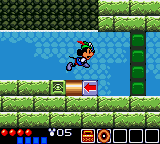
The game follows the same design formula as its direct predecessor, Land of Illusion. The Game Gear port of Land of Illusion is actually a cropped port of the Master System version, with some scenes redrawn to accommodate the lower screen resolution. However, this did introduce a lot of flick-screen scrolling when you move up or down, and Legend of Illusion is particularly bad for this too. It scrolls perfectly smoothly when you’re moving horizontally, but once you reach the very top or bottom of the screen, it will force a flick-screen transition. In actuality, every 8 bit Illusion game does this, but it wasn’t as noticeable in the Master System ports of Castle and Land of Illusion thanks to their larger resolutions. The Game Gear port of Castle of Illusion is also notable for just being the Master System game running in compatibility mode, so there’s no cropping of visuals in that particular port either.
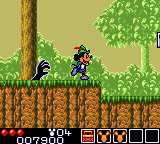
Mickey has also had his offensive capabilities stripped back. Mickey cannot butt-bounce in Legend of Illusion, and you have to rely entirely on throwing bars of soap at enemies to damage them. You do have infinite projectiles as a result, but having one less option to attack does greatly simplify the action. Some objects like blocks and chests can be picked up and thrown too, but the offensive shift in Legend of Illusion is one focused entirely on projectiles, which feels fairly limiting for a platform game.
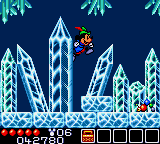
Stage design is perfectly serviceable, but nothing ground-breaking for a platformer. Castle and Land of Illusion felt a lot more creative and challenging; offering up a more varied selection of puzzle and platforming challenges to overcome. You can absolutely power through Legend of Illusion with no trouble whatsoever. It certainly makes the game more approachable for a younger audience, but Castle and Land of Illusion felt like they were more focused on being great games regardless of demographic, while Legend of Illusion waters things down to the point of becoming uninteresting. It’s certainly not a bad game, but the only time you’ll be really tested are with a couple of late game bosses that require you to do something more than just throw projectiles at them. There’s a dragon boss that tasks you with landing on its head to make it throw a spiked ball at itself, and the final battle with Pete requires you to catch his own bombs and throw them back at him. These are minor variations on a theme, but they do help the game diversify itself a bit, and they manage to stand out as a result.
The audio/visual presentation is thankfully as brilliant as ever, and the game is loaded with vibrant, colourful stages and some wonderfully expressive character sprites. The soundtrack is another earworm as well, with several tunes burrowing their way into your psyche and playing back in your head long after you’ve finished playing the game. Aspect and SEGA CS5 have to be commended for successfully carrying on the tradition of great music and graphics in 8 bit Illusion games with their work in Legend of Illusion.
Unfortunately, the quality of the presentation isn’t enough to save Legend of Illusion from being anything other than a decent if unmemorable platform game. This is an extremely breezy 40 minutes of Disney action that will pass in no time thanks to the lack of difficulty, but it doesn’t leave the same impression as its predecessors which were much more impactful and challenging games that didn’t talk down to their audience. This is by no means a bad game, but its uninspired stage design and lack of variety don’t offer the same depth as Castle or Land of Illusion. As a result, this is a serviceable but uneventful follow-up to Land of Illusion that fans of the franchise will enjoy, but won’t revisit nearly as often.
6/10
Written by Lewis “Sonic Yoda” Clark 19/5/2026
Video review published 22/5/2026
Screenshots